
Empowering Adolescents through Inclusive Education in Nepal
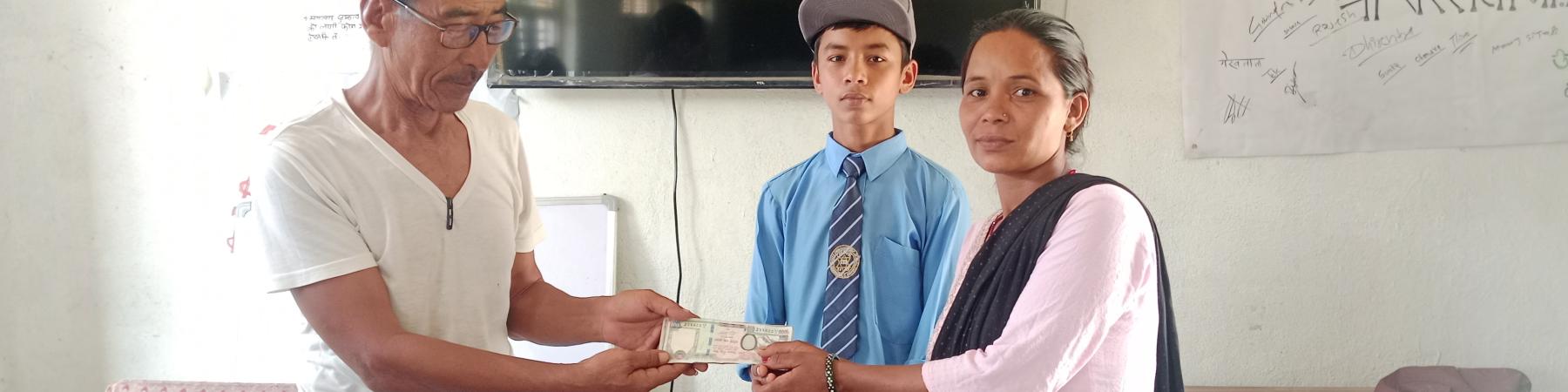
“Since my childhood, my father has been missing, and my mother, facing challenging circumstances, managed to raise me by taking on diƴ erent jobs. I was on the verge of dropping out of school due to lack of basic supplies like stationery and a proper school bag. I used to carry my books in a plastic bag. Instead, thanks to the bursary amount I received, I could purchase essential school supplies, including a school bag. This has eliminated the additional burden on my mother for my education. I have also deposited the remaining amount in a cooperative, allowing me the fl exibility to acquire additional educational necessities if needed.” Mamata, Banke
Nepal is one of the poorest countries in the world, with 25.4% of the population living below the poverty line. The Project works in 7 municipalities of Banke, Surkhet, Dailekh and Achham. Geographical isolation, limited access to essential services, and a high rate of youth migration, often leading to exploitation abroad, are amongst key challenges in these areas. These, exacerbated by poverty, entrenched social norms, discrimination, and barriers related to gender, disability, and culture result in high rates of school drop-out.
In order to restore young people´s right to education, the POWER 4 AY Project in Nepal focuses strong efforts to supporting adolescents from the most marginalized families, vulnerable to dropping out or who have already done so, for their enrolment and retainment in the education system, thereby facilitating their access to further pathways of wellbeing, empowerment and resilience. By engaging all layers of the socio-ecological model, we aim for no one to be left behind. Reaching out to adolescents and their communities is at the heart of the strategy. This is done by emphasizing the importance of education and fostering a culture of commitment to young people’s education. Family involvement is key to effective outreach and engagement, which includes home visits, parenting education, and role model mobilization. Gender disparities in education are addressed head-on. Taking into account that a lot of girls are left out of education due to cultural reasons, the program focuses on increasing opportunities for girls and challenging social norms.
The project works closely with the community, leadership, municipality, and education system to identify adolescents most affected by inequality and discrimination. Notably, Municipal Disability Profi les were developed in coordination with public actors and Organizations of Persons with Disability. This substantive effort mapped and collected data on the status and situations of people with disabilities to lay the groundwork for more inclusive policies and programming, equip advocates with a powerful tool and help the project better target its outreach.
Bursaries are then given to selected participants to help them continue their education. The support is carefully managed, with selection criteria established with local stakeholders, joint home visits, and attendance monitoring to ensure accountability. Here, community actors’ empowered commitment to young people’s education becomes evident. The initial funds provided by the project are quickly attracting complementing support. Leveraging support from local government and the private sector, including banks and hotel associations, and even small local businesses and individuals, the bursary funds are substantially increased, allowing many more vulnerable adolescents to be reached. Furthermore, this initiative is institutionalized and replicated by municipalities creating their own bursary support projects, adopting project methodology. The ability to inspire actions in favour of young people´s wellbeing is a powerful asset.
The project works with 28 schools with actions enhancing educators’ capacity and quality service delivery. Educators are trained on gender, inclusion, and safeguarding, while catchup classes for dropout and low-performing students are organized to strengthen them academically. Guidebooks have been developed for Math, Science, Nepali and English as well as other teaching tools. These catch-up classes are having notable results by increasing the learning achievement of students by between 23% and 29%. Results are catching the attention of authorities and already being replicated in other schools.
Additionally, the program strengthens functional literacy and numeracy in adolescents, particularly in those embarking on economic pathways. For this, Nepal´s project has adapted a strong methodology developed by the project in Uganda, a great example of collaboration to replicate best practice. 12 weekly sessions not only enhance educational outcomes but also contribute to economic empowerment, paving the way for a brighter future for Nepal’s adolescents.
To further strengthen gender equality, the project supports targeted improvements in water, sanitation and hygiene in schools. Inclusive bathrooms were improved and sanitary pad vending machines installed. All these initiatives are framed within agreements of mutual responsibility which facilitates scale. Services and policy are already institutionalizing approaches and carrying project strategy beyond its current reach.
The challenges facing Nepal’s youth, compounded by poverty, social norms, and discrimination, underscore the critical need for comprehensive support in education and empowerment. The POWER 4 AY Project exemplifi es a holistic approach, addressing not only educational access but also broader societal issues affecting marginalized adolescents. By prioritizing inclusion, leveraging resources, and championing gender equality, the project sets a powerful preceden