
Empowering Right´s Guarantors with Save the Children´s Common Approaches in Albania
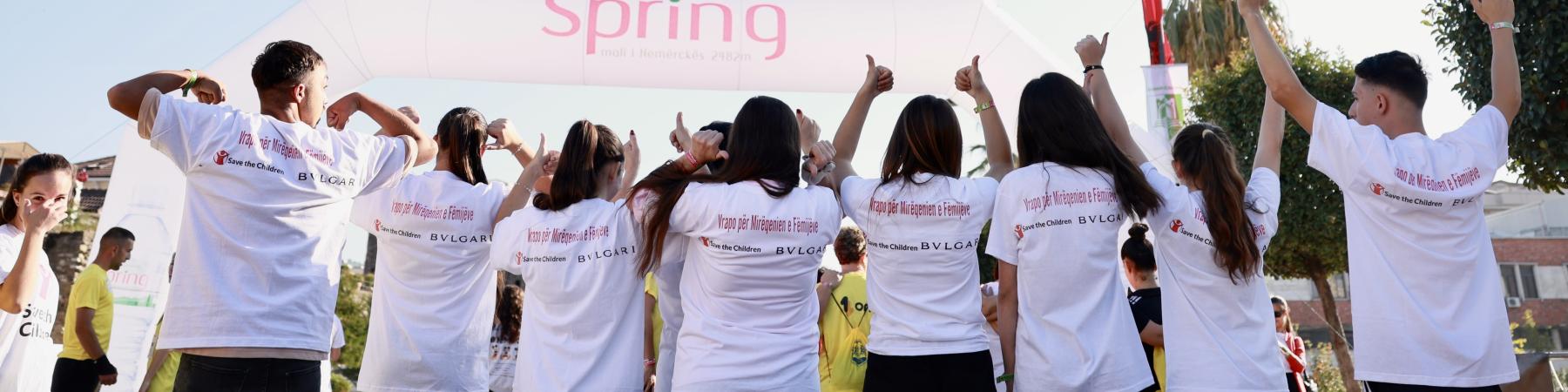
“One day, while I was staying with friends in my neighbourhood, I met Alketa, (the local Project Coordinator) she told us about the project and the activities in the community center and invited us to participate. In the center, I was introduced with the project and I remember I had many questions. Since that day and for a year on I never miss a day and an activity in the center. I feel lucky to join the project which is the only ray of hope I have. I feel comfortable and supported, while sharing my concerns and fears for my life and future.” Maks, 18 years old
Despite attaining middle-income status, Albania remains one of the poorest nations in Europe, marked by persistent inequality and systemic barriers. In 2021, the youth unemployment rate (ages 15-29) stood at 21%, with signifi cant gender disparities in economic participation and limited access to quality services exacerbating high rates of youth migration. The country grapples with a signifi cant population decline driven by mass emigration and demographic shifts.
In parts of Albanian society, entrenched social norms refl ect traditional, patriarchal values that perpetuate gender-based violence, such as early marriages, and make it harder for girls to obtain higher education or get sexual and reproductive health care. According to a recent INSTAT Survey on Violence against Women and Girls, gender-based violence isn’t just widespread, but also socially acceptable by half of the population, with 50% of women thinking domestic violence is a private matter, 46.5% believing women should tolerate violence to keep their families together, and 26.1% saying women should be ashamed to discuss their rape.
In Albania the POWER 4 AY project works WITH and FOR young people (10-24) empowered along transformative pathways to self-fulfi lment in Shkoder, Elbasan and Diber. In these municipalities, between 30 and 43 percent of the population need social protection, but Albania’s welfare system faces big challenges and is limited. Working to address these challenges involves all relevant actors in society to reduce violence among young people. For this, the project promotes supportive and protective families and communities whilst boosting access and quality of prevention and protection services.
A strategy that is making a big difference is to collaborate with municipalities to set up Multifunctional Community Centers, mandated by the Law on Social Services. Save the Children supports the operations of these centers which are aligned to the projects objectives, facilitating the rollout of inclusive activities and services. Rights Guarantors adopt and scale impactful strategies that strengthen prevention and protection and promote sustainability which is highlighted in the agreements with municipalities.
The Life Skills for Successful Transitions Common Approach is a main pillar that guides these centers to offer youth an attractive program of 22 activities that equip them with essential skills to navigate challenges, enhance resilience, and make informed decisions on various aspects including migration, academic performance, advocacy and sexual and reproductive health. Furthermore, families also benefi t from Positive Parenting training sessions and have set up self-support groups using the methodology of the Parenting without Violence Common Approach. Moreover, the centres facilitate access to employment counselling, health services, and child protection services. In particular, Child Protection Services are strengthened with the Steps to Protect Common Approach for a systematic step-by-step process to working with individual children, girls and boys and their families to address all forms of violence, abuse, exploitation and neglect experienced by children. Numerous cases are being managed through tailored mechanisms to meet their specifi c needs.
Utilizing a multi-stakeholder strategy, the POWER 4 AY Project in Albania actively involves young individuals, communities, service providers, institutions, and advocates for rights, fostering a supportive and secure environment. Through collaboration with essential stakeholders, the project elevates both the accessibility and quality of prevention and protection services while bolstering the capabilities of local institutions and rights guarantors towards ensuring the well-being of young people.