
Empowering Youth Led Initiatives for Sustainable Change in Uganda
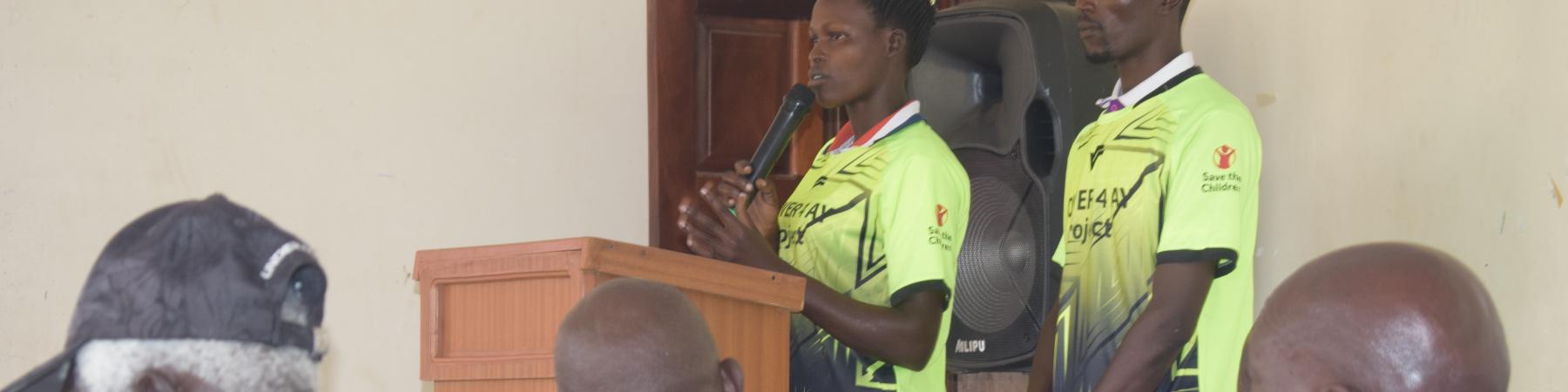
“I have learned a great deal from the training, and I am now unafraid to speak on behalf of my peers, ensuring their voices are heard by decision-makers.” Barbra, 18 years old
With 45% of the population of Uganda aged 0-14, Uganda is the world’s second youngest country. Young Ugandans confront signifi cant challenges, compounded not only by demographic factors but also by the enduring legacy of decades-long confl ict. The POWER 4 AY Project works in Northern Uganda´s districts of Amuru, Nwoya, and Omoro. This region is marked by high levels of multi-dimensional poverty and strong barriers to education, training, and livelihood opportunities which the project aims to address head-on.
Empowering youth-led organizations, networks, and young leaderships to spearhead youth empowerment is a key driver of transformative change. Through strategic partnerships, capacity-building initiatives, and advocacy efforts, the project is fostering a supportive environment where young people are the protagonists, leading the change they want to see in their lives. For this, 10 youth led organizations are engaged to champion initiatives that tackle pressing issues faced by youth.
A strong process of training on advocacy and lobbying skills equips representatives from these organizations and includes Organizations of Persons with Disabilities and networks. These provide tools to effectively engage in policy exchanges and community dialogues. Training delves into Specific, Measurable, Attainable, Relevant, and Timebound (SMART) advocacy principles, and the crucial role of advocacy in influencing policies, budgets, and programs. Emphasizing hands-on learning, the training enables youth on developing objectives, identifying stakeholders, crafting advocacy asks, and formulating a work plan for implementation.
Furthermore, actions specifically target girls’ leadership and advocacy capacity building. Training on genderresponsive budgeting empowered 52 young women to advocate for gender-responsive policies and programs. The training strengthened their knowledge and skills to identify and address exclusions, discrimination, inequalities, injustices, and barriers stemming from societal and familial expectations. After the training, female representatives from Youth-Led Organizations mobilized young women, girls, and youth to engage in villages, parishes, and sub-county level budget and planning processes. Over 150 youths actively participated and influenced the planning for the fiscal year 2022/2023. In the last year, these trained young women took the lead in spearheading awareness creation events on gender-based violence during the “16 Days of Activism” event. In this occasion they compelled responsible authorities to act on addressing unattended genderbased violence cases and seeking justice for victims.
In Amuru, youth organizations spearheaded the “GO BACK TO SCHOOL” campaign and advocated for better facilities for adolescent girls in schools, while in Omoro, they partnered with stakeholders to advocate for disability inclusion. These efforts have contributed to a significant improvement in classroom attendance, with an overall increase of 13% in the third term. In Nwoya district, Koch Goma Sports Association stood out for its specialization in developing youth talents through sports. In Amuru, Allied Source Network Uganda focuses on environmental justice and social media engagement through advocating for environmental sustainability. These are just some examples of a growing movement of youth advocates.
Organizations of Persons with Disabilities are also achieving notable outcomes, including securing land for the establishment of their permanent home and office in Omoro, whilst Nwoya Women and Girls with Disability Association leveraged their newfound skills to launch the construction of their offices, impressively raising over UGX 30 million during a fundraising event. These results have been directly attributed to the advocacy and lobbying capacity-building facilitated by the project.
Through community dialogues and community mobilization events youth have been very active in their communities raising awareness about issues such as teenage pregnancy and genderbased violence. These initiatives have garnered support from local authorities and stakeholders, leading to concrete actions. Commitments that the youth achieve from key stakeholders ranged from reducing teenage pregnancy to addressing harmful cultural practices and combating substance abuse in Omoro.
A key practice is to link youth with local government planning and management. For example, youth organizations successfully advocated for increasing health sector budget allocations to establish youth-friendly corners at health facilities. Young individuals strategically positioned in advocacy platforms engaged decision-makers who responded by increased youth representation in budget conferences and a 10% increment in addressing youth health needs committed.
The POWER 4 AY project exemplifi es how the power of youth-led initiatives is driving positive change and promoting social justice. By empowering young people to advocate for their rights and participate in decision-making processes, the project is laying the groundwork for a more inclusive and equitable society in Uganda.
“I never knew about gender and sex, planning, and budgeting, but now I have confi dence and self-esteem. I can explain to fellow youths what this means.” Flavia- young leader from Amuru.