
Maks´ Story of Resilience and Empowerment
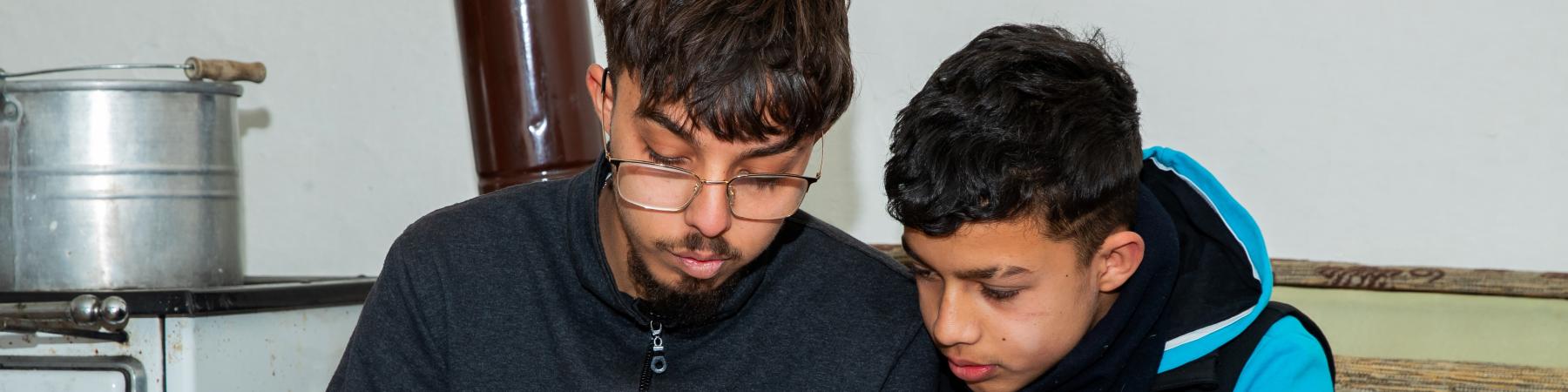
Tackling discrimination and inequalities through education and livelihood opportunities for adolescents
The cycle of poverty and exclusion that afflicts Roma adolescents and youth in Albania takes root in early childhood and can persist throughout their lives. Many of them are denied access to basic necessities such as food, housing, adequate healthcare, quality education, employment opportunities, and essential social services.
Maks, a sixteen-year-old Roma youth in Albania, resides in Elbasan city's most impoverished neighborhood. This challenging environment has subjected him to a life marked by scarcity, discrimination, and exclusion, threatening his potential as he was close to abandoning his education.
Facing economic hardship, Maks' family of five struggles daily with food shortages, inadequate shelter, and limited prospects. A single cramped room is their home, lacking essential furnishings.
Maks' parents, lack formal education, and employment. They sell second hand clothe at the local market to ensure modest income for living. His brother age 11 is at the 6th grade of the primary school while his sister age 15, has dropped out of school and is married at age 14.
At eleven, a head injury left Maks with chronic headaches, impairing his health and school progress. Financial constraints prevented proper medical care, whilst his dreams of education and self-improvement were stifled by poverty's grip.
Hope emerged when Maks encountered Alketa, the Project's Local Coordinator. Through her guidance, he found support in a community center. Individual counselling and vital education materials sparked a transformative journey. With newfound confidence, Maks pursued education, performed well in his studies, and even became a leader within his class.
"Growing up in a neighborhood plagued by poverty, I couldn't help but face inequalities that surrounded me," Maks shared. "Ion one side of the river, houses looked rich and fancy, but our roads were bad. Young girls like my sister had to get married early, and boys had to beg or work to survive. I had constant headaches but could not afford a doctor in Tirana. This made me feel even more alone. I really wanted to join school, do fun activities, use technology, and learn skills. But I didn´t even have basic things like a good bed. I really wished for a way out of this reality but lacked the knowledge of where to turn.”
When Maks was asked to join the Project, he remembers asking a lot of questions. That was the start of a big change in his life. From that moment onward, not a day went by when Maks did not attend an activity at the center. It provided comfort and support while allowing him to share his concerns and aspirations for the future. The turning point arrived when he received referrals to specialized health services in the capital, undergoing a challenging yet ultimately successful surgery. The center also supplied him with essential school materials, academic guidance, and, most importantly, a sense of encouragement and belonging.
Accompanied by his grandmother, who took an active role in the projects parenting sessions, Maks embraced his newfound opportunities. His grandmother's steadfast support acted as a shield against the challenges posed by his parents' frustrations, reminding them to listen and engage with Maks rather than resorting to anger.
Today, feeling fully recovered, Maks completed his nine-year schooling and enrolled to a Professional School focused in Hotels and Tourism complete with a monthly scholarship. His participation in the center's activities has equipped him with a wealth of knowledge that often surpasses that of his peers. He has honed gained resolution skills, taken a stand against bullying and violence, and cultivated self-esteem that empowers him to address critical issues such as early marriages—a pressing concern in his community. Maks' success extends beyond schooling; he has become a leader within his class, participating enthusiastically in various school initiatives. Yet, his aspirations do not end there; Maks is eager to learn and grow, to address inequalities faced due to poverty and his Roma identity. His vision of inclusion means treating every individual with dignity they deserve, facilitating access to services, and nurturing a supportive environment.
The path ahead remains challenging, but we are determined in our pursuit of enhancing youth life skills, providing essential services, fostering education and psychosocial support, developing their entrepreneurial skills and encouraging community initiatives.
Now I feel hopeful and eager to learn and make progress in school. I don’t want to feel different solely because I live in poverty and am of Roma heritage. Inclusion, to me, means treating everyone as a human being with the dignity they deserve. It entails feeling fully like myself, being heard, and being supported in accessing services and opportunities.” - Maks