
Scaling What Works: Strengthening Rights Guarantors for Adolescent Wellbeing
Sustainable change for adolescents and youth also means strengthening the systems and services that guarantee their rights. Rights guarantors such as municipal governments, ministries, and service providers play a central role in shaping policies, delivering services, implementing programs and creating the environments where young people can thrive. By coordinating closely with these actors, the POWER 4 AY Programme ensures that successful, proven methodologies implemented by the project and its partners are adopted, institutionalized, and scaled for lasting impact.
This article highlights how such collaboration is transforming protection and empowerment systems in two countries. In Albania, municipal partnerships have led to the establishment of multifunctional community centers that integrate life skills, family support, and protection services. In Bolivia, joint work with national authorities resulted in a comprehensive toolbox that strengthens public investment and guides municipalities in addressing the rights and needs of adolescents and youth.
Together, these examples illustrate how engaging rights guarantors bridges community-level innovations with systemic change, ensuring that adolescents and youth are supported not just today, but for generations to come.
-
Empowering Municipal Youth Services in Albania through Save the Children’s Common Approaches
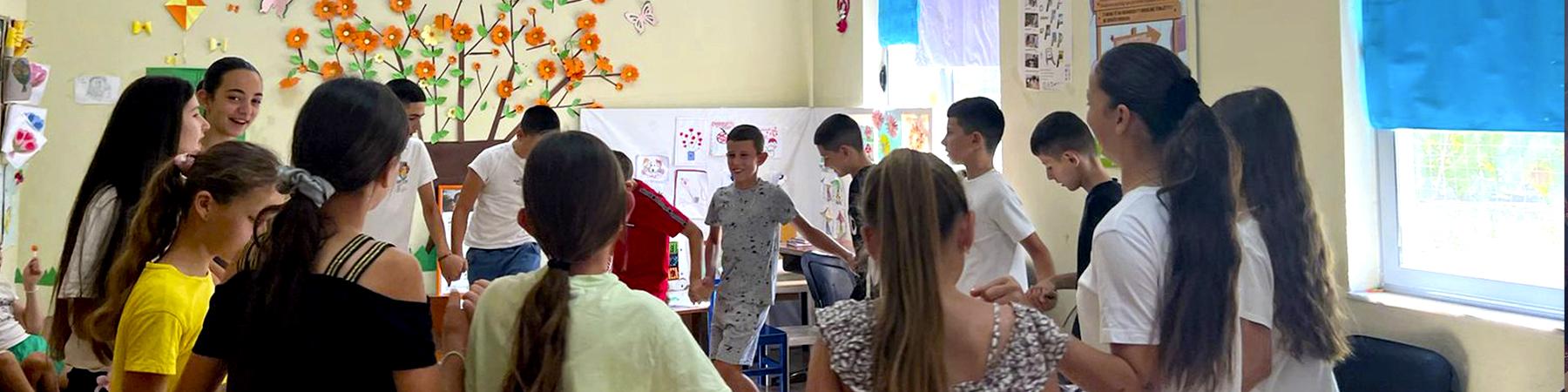
In Albania, the POWER 4 AY Programme works hand in hand with municipal governments to strengthen community-based protection systems and development opportunities for adolescents and youth. A central strategy has been the establishment of Multifunctional Community & Youth Centers, mandated by the Law on Social Services, which serve as hubs for prevention, protection, and empowerment, engaging youth and families in vulnerable situations.
These centers are not only aligned with national policy but also infused with Save the Children’s Common Approaches, ensuring that proven methodologies are transferred directly into municipal structures. The Life Skills program based on the Life Skills for Success Common Approach offers 22 inclusive activities that help young people (10–24) build resilience, improve decision-making, and address challenges related to migration, education, and sexual and reproductive health. Families, supported through the Positive Discipline in Everyday Parentingapproach, engage in training sessions and self-support groups to strengthen protective family environments. Meanwhile, the Steps to Protect Common Approach equips local staff with tools for effective case management, to address an individual child’s (and their family’s) protection and/or welfare needs in an appropriate, systematic and timely manner through direct support, local support systems and/or referrals by linking actors, including health and employment services, for comprehensive support.
By embedding these methodologies in the everyday operations of municipal centers, Save the Children ensures that good practices become part of the public system. The result is a more responsive and sustainable prevention and protection framework—where youth are empowered, families are supported, and municipalities are equipped to guarantee the rights and wellbeing of adolescents and young people.
Tools for Change: Strengthening Public Investment for Adolescents and Youth in Bolivia
The POWER4AY´s team in Bolivia, complemented with support from Save the Children Italy, led a highly strategic initiative aimed to strengthen public investment by providing local governments with a practical “Toolbox” to plan, implement, and monitor policies and programs that respond to the rights and needs of adolescents and youth. Whilst relevant policy as the Youth Law gives local governments the responsibility to implement projects for youth empowerment and provide youth friendly services in areas as health, there was an important gap in terms of know-how which rescues best practices which can be contextualized to the different realities of the country´s 337 municipalities.
To address this gap, the Toolbox was developed in close coordination with the Vice-Ministry of Equal Opportunities (Ministry of Justice) and other state bodies. It brings together Bolivia’s best practices informed by Save the Children Bolivia and its partners significant experience of working with adolescents and youth. The Toolbox includes 5 well developed and detailed guides:
- A Guide for public planning and management of autonomous territorial entities in matters of adolescence and youth.
- A Guide for sexual and reproductive health (SRHR), supporting the design of strategies and services tailored to adolescents.
- A Guide on employment and entrepreneurship, with tools to link young people to decent work and strengthen economic opportunities, including developing work exchanges and business incubation and mentorship services.
- A Guide on youth participation and advocacy, to help meaningfully integrate youth voices into decision-making processes.
- A Guide on alternative education policies, created with the Vice-Ministry of Alternative and Special Education.
These guides contain not only methodological orientations but also concrete operational tools—standard formats, sample regulations, participatory planning strategies, monitoring templates, and accountability mechanisms. They are designed to be used by municipalities and departmental governments during planning cycles, budgeting, and program implementation, ensuring that policies for young people are evidence-based, participatory, and sustainable.
In coordination with the national government, the POWER4AY team is now busy carrying out methodological transfers of these Toolboxes to reach Bolivia’s 337 municipalities. The process delivered lasting results: the creation of detailed methodological guides, stronger partnerships with government institutions, and a joint commitment to continue to strengthen the capacity of local governments to better serve adolescent and youth priorities and needs. Ultimately, these tools enable local governments to operationalize powerful strategies, while aligning them with national policy priorities and government visions—turning proven approaches into actionable public policies.